
Will There Come a Time Where Poa pratensis Becomes More Popular in Football Pitches in the UK?
July, 2026 · Dean Tingley · ProPitch
With temperatures in the UK becoming more extreme year on year, I am starting to ask myself more regularly, how long will it be before we see a shift in the grass species used on elite football pitches?
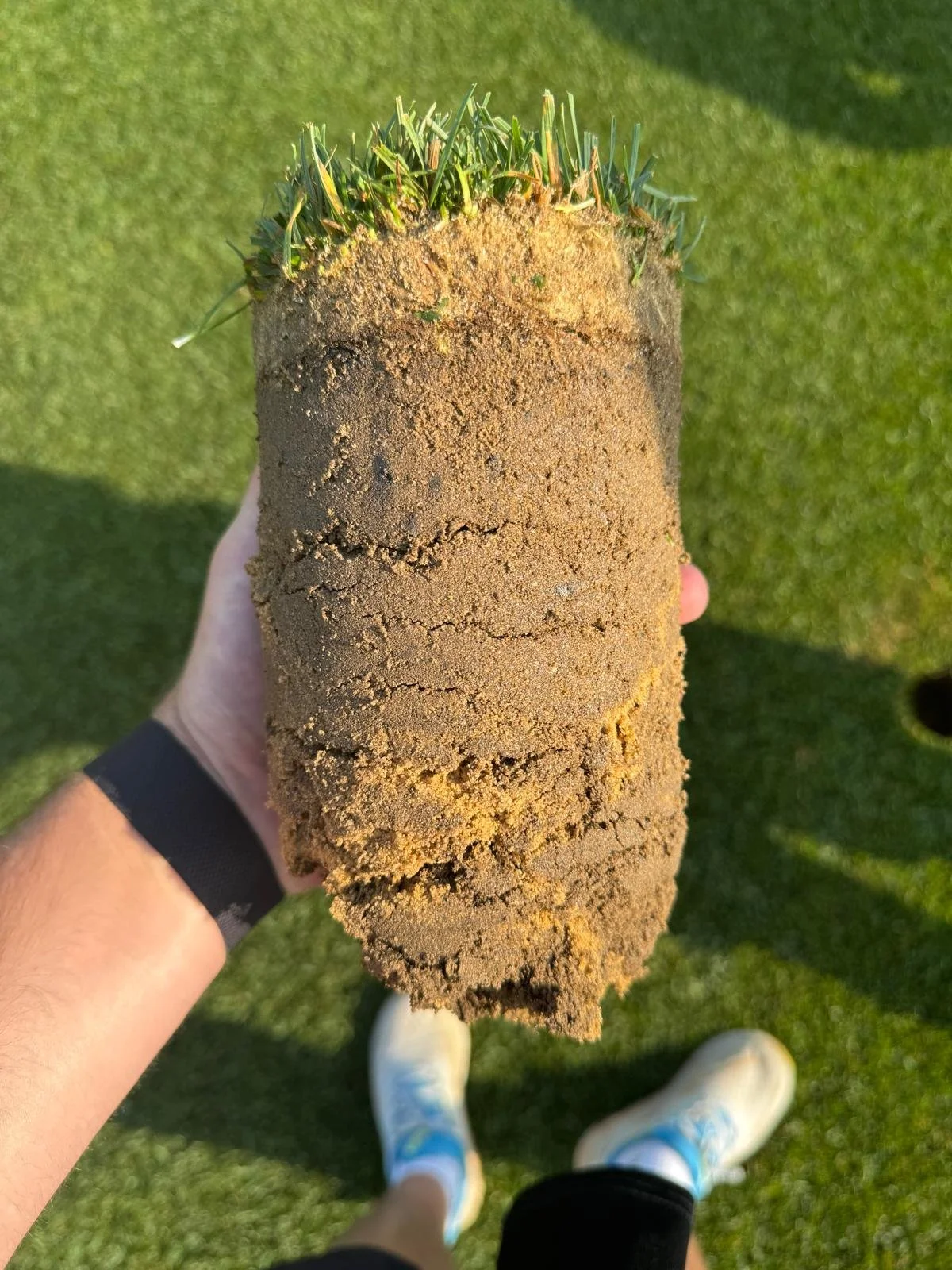
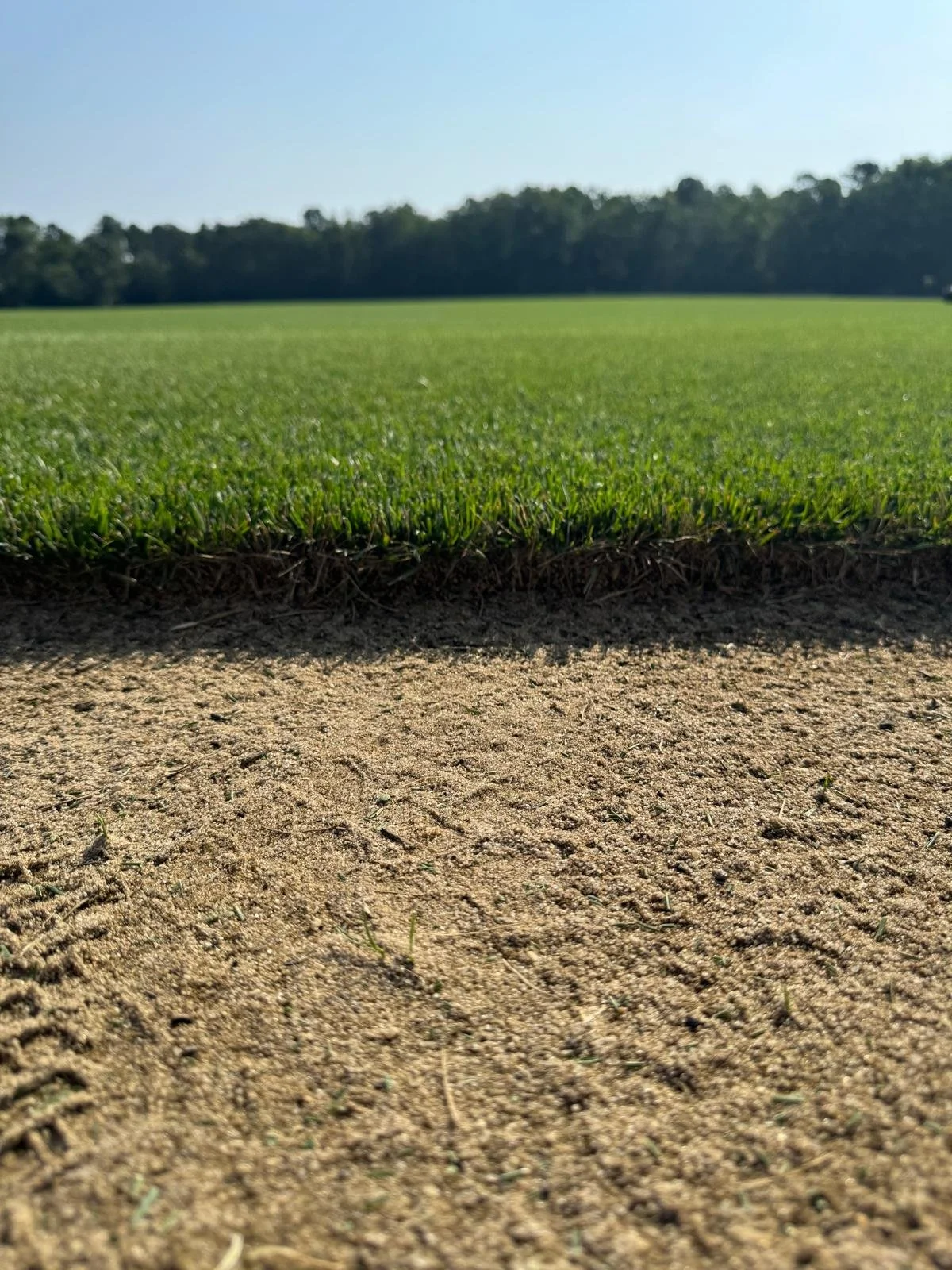
For decades, perennial ryegrass (Lolium perenne) has been the go-to. Reliable, quick to establish, and well understood. Alongside this, Smooth-stalked meadowgrass / Kentucky bluegrass (Poa pratensis) has long been used in other parts of the world, particularly in the USA where “bluegrass” surfaces are extremely popular. Still to this day, the most impressive turf farm I have seen in advance of harvest was a Poa pratensis plot — so good that it was almost a shame to harvest it.
But is the traditional UK approach still the right answer in a climate that is becoming less predictable? Or are we holding onto something because it has always worked, rather than questioning whether there are alternative solutions out there?
Growing in, establishing and maintaining surfaces in the summer conditions we are becoming accustomed to is becoming increasingly difficult. Extended periods of heat are putting surfaces under stress that we simply didn’t see 10–15 years ago. On top of that, carrying out essential maintenance while managing disease pressure — particularly threats like gray leaf spot — is making life harder for ground staff and I can imagine causing sleepless nights.
So where does the conversation go from here? Do we continue to push Lolium perenne to its limits, or do we start to look more closely at practices already established elsewhere?
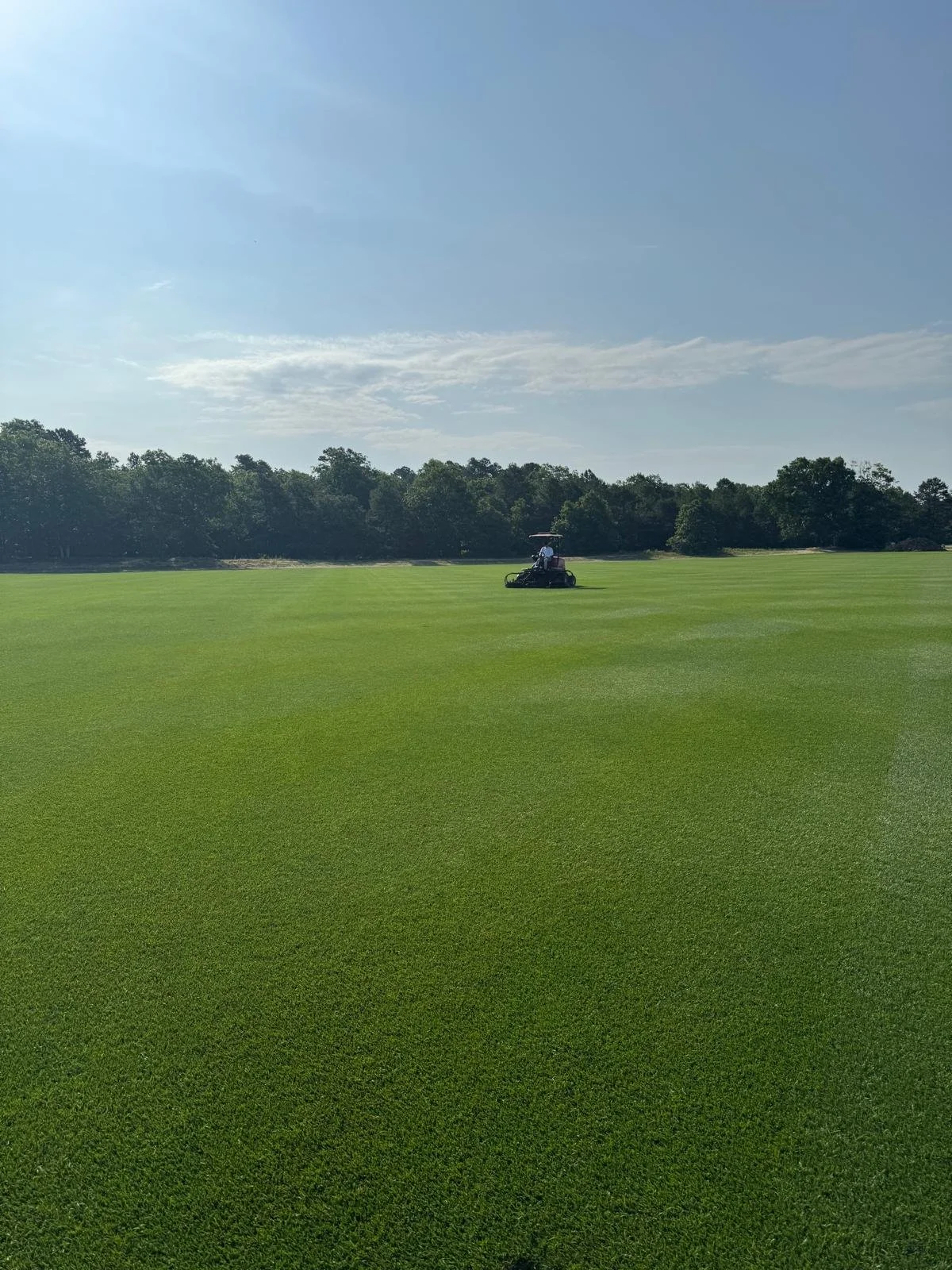
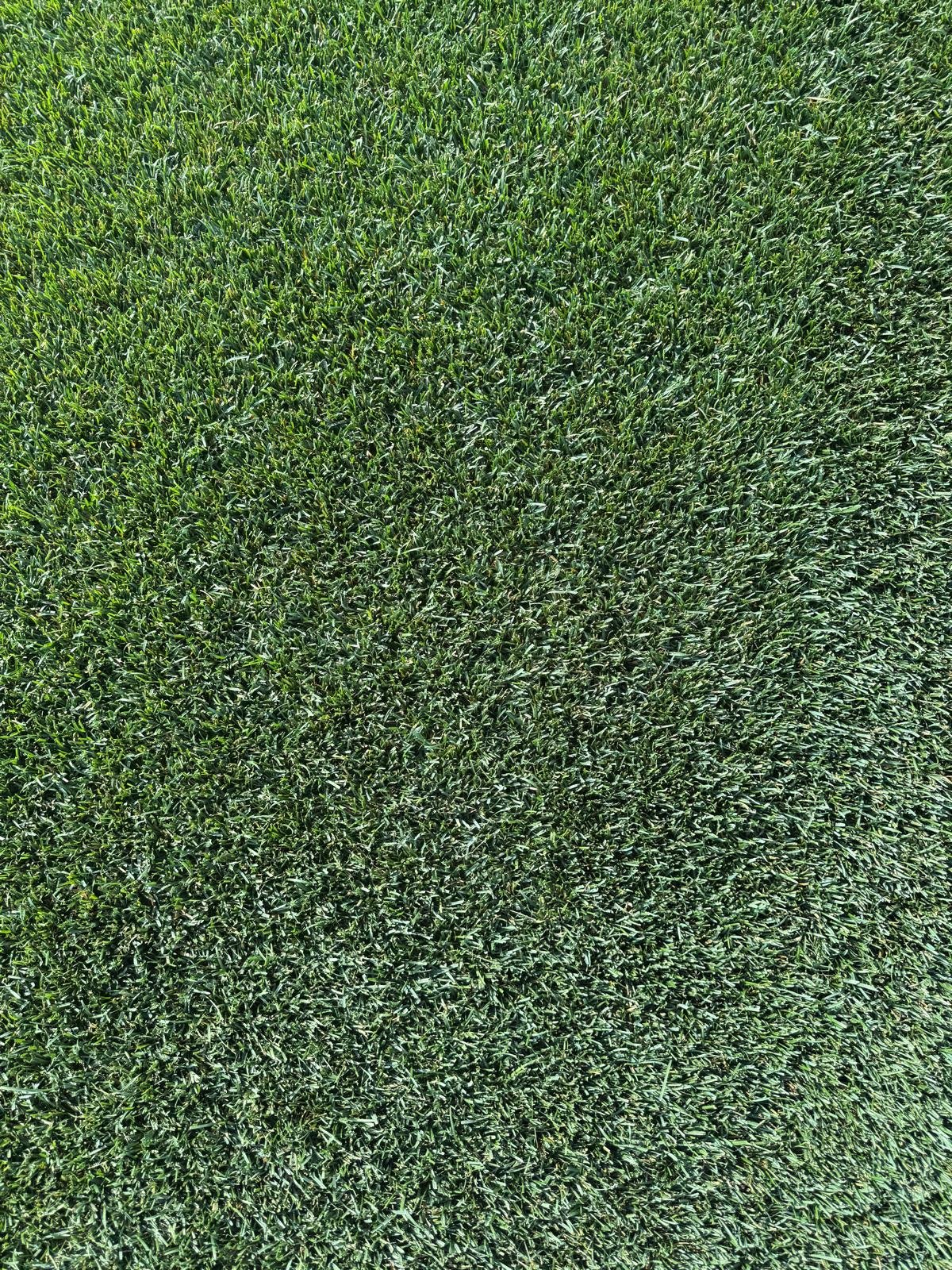
When I first started working across the rest of the world, it took me some time to properly understand Poa pratensis as a serious option. Like many, I was far more comfortable with Lolium perenne and what it offers. But over time, and having worked on more Poa pratensis surfaces, that view has naturally broadened.
Yes, it has its limitations. Establishment from seed is slower — typically around 25% longer than what we are used to with Lolium perenne. In a world where time is often against you, that matters. But the model in stadium environments has shifted in recent years. Establishment has become so quick that commercial streams and how they impact surfaces have changed. Grow-in and establishment speeds with Lolium perenne are now so efficient that I’ve had a groundsman say to me recently, “I’d rather have 6 weeks to grow and establish a pitch than 10!”. So quick that we are now seeing a revival of “turfed pitches” in hybrid lay-and-play form to maximise commercial windows. However, with that comment in mind, what is it about those extra 4 weeks that is actually the problem? Is it simply the stress of maintaining a surface through extreme heat when there is no real need to? And if that is the case, does that open a window of opportunity for Poa pratensis and its extended grow-in period?
From experience, Poa pratensis appears to handle higher temperatures more comfortably. Add to this it’s greater resistance to Gray leaf spot and all of a sudden there are a few less sleepless nights during the extreme hot periods we are now facing. At the same time, Lolium perenne continues to offer a level of predictability and speed of recovery, particularly throughout the colder months. This opens the door to a mixture of both to better cope with the extremes across a season.
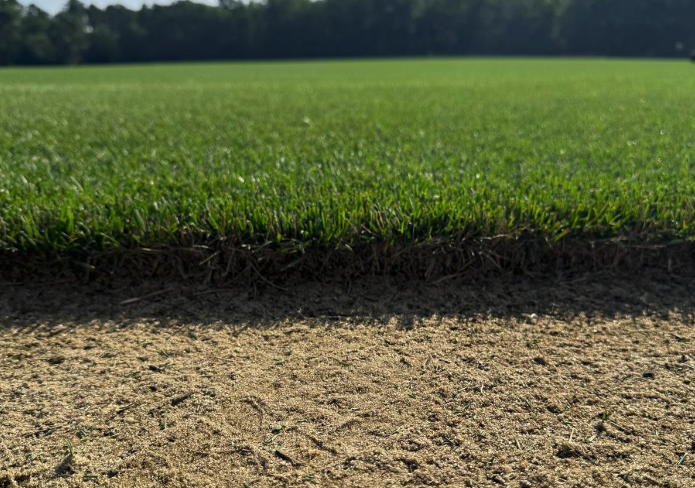
Looking at the data, the differences between the two species are not as significant as some might expect. In fact, in many areas, they are remarkably similar.
Traction values are often slightly higher in Lolium perenne pitches, averaging around 38Nm, with Poa pratensis marginally lower. But is that difference meaningful in a practical sense? Does it materially impact performance?
Thatch and organic matter depths are almost identical, with only minimal variation. NDVI values also tend to be very similar between the two.
Where Poa pratensis can show an advantage is below the surface. Root mass and depth are, on average, around 10% greater. In a world where stability, drought tolerance, and resilience are becoming more important, that is certainly worth consideration — but not necessarily a definitive reason to change approach.
There is also the question of disease. Poa pratensis can show improved tolerance in certain situations, which may reduce reliance on chemical inputs. However, Lolium perenne systems are well understood and have proven to be managed effectively with the right approach.
From a visual perspective, it is also worth noting that a thriving Poa pratensis pitch can produce a very rich, consistent colour that is often particularly pleasing on the eye — something that is always welcomed in elite environments.
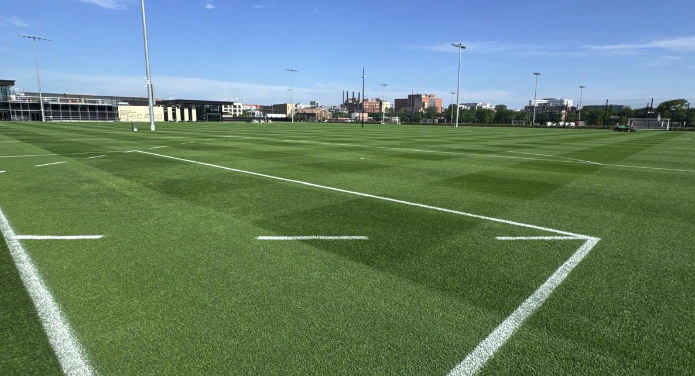
As mentioned, another factor to consider is how pitches are now being delivered. We are seeing more elite surfaces in the UK that are grown off-site and installed as turf. This removes some of the time pressure associated with establishment and opens the door to more diverse seed mixtures. In that context, integrating Poa pratensis becomes far more practical than traditional seed-based establishment windows might allow.
So why hasn’t there been a wider shift already? Is it familiarity? Risk? Or simply that Lolium perenne continues to do the job well enough?
There is a long-standing mindset in the industry that if something isn’t broken, there is no need to fix it. And in most cases, that still holds true. But as conditions evolve, it is reasonable to at least question whether the current approach remains optimal.
Based on both the data available and practical experience across different environments, the performance gap between Lolium perenne and Poa pratensis is relatively small. Each brings its own strengths and limitations.
So the question remains — how long will Poa pratensis continue to be underutilised in the UK?
Written by Dean Tingley, Business Development Manager