
What does 10 Million Data Points Reveal About Pitch Performance?
With the turn of the weather and, hopefully, the worst of the winter conditions now behind us, attention can begin to shift back towards enhancing pitch quality between now and the end of the season.
For many grounds teams, March often feels like a turning point. Temperatures begin to lift, daylight hours increase, and the grass plant starts to respond again.
But what does the data actually tell us about how playing surfaces are performing at this time of year?
Looking across our database of more than 10 million pitch performance data points collected since 2018, we have taken a closer look at how surfaces typically perform during March, how this compares with February, and what it might suggest for the weeks ahead.
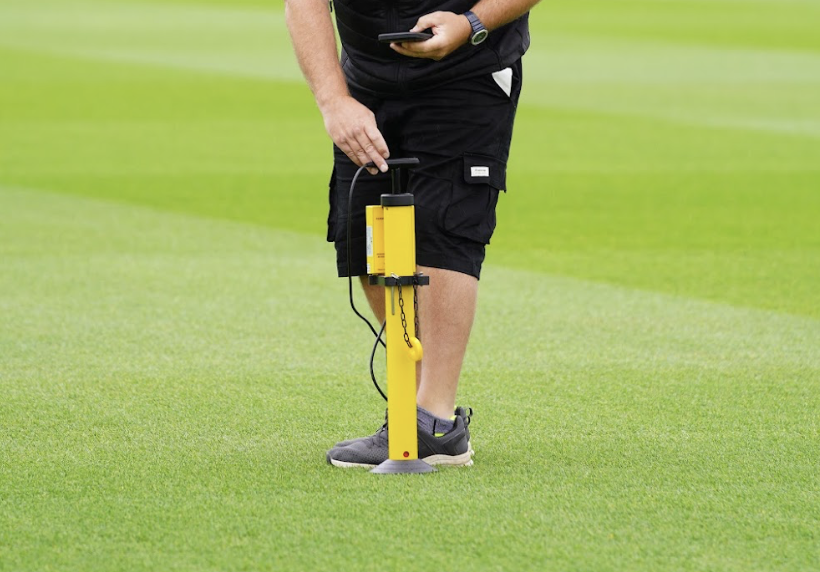
Average surface hardness for March sits at 82G, slightly softer than February’s 84G.
The more favourable weather conditions compared to the previous month are beginning to provide grounds teams with far more manageable working conditions. With less persistent rainfall and greater opportunities for surface management, this value becomes a far more controllable metric for grounds teams as they move into the growing season.
When separating the data between surface types, the gap becomes far more noticeable. Hybrid reinforced pitches average 88G, while natural pitches sit considerably lower at 77G. That 11G difference is a sizeable margin and highlights the structural consistency that reinforced systems provide. Natural pitches, which often contain heavier soil profiles and varying drainage performance, will naturally retain more moisture and therefore present a softer surface.
Natural pitches without hybrid reinforcement are becoming a rarity at the highest levels of elite football, so the softer values are perhaps no surprise. In reality, the difference is not driven by the hybrid reinforcement itself, but by construction. Around 90% of reinforced pitches are built as sand-over-gravel systems, while most non-reinforced surfaces still contain higher soil content and may lack sufficient drainage infrastructure. The data reflects this clearly. Non-reinforced pitches show an average moisture content of 25%, compared with 21% on reinforced systems.
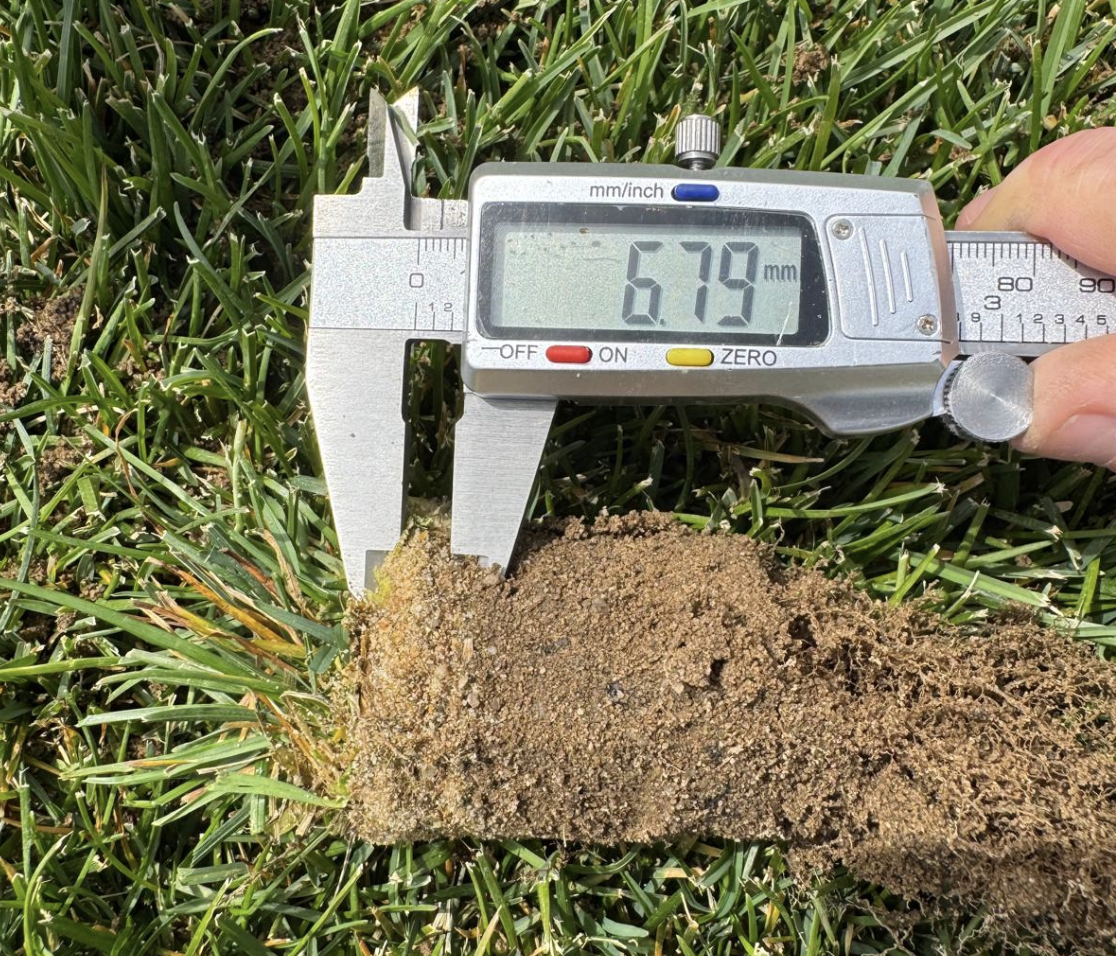
Another noticeable trend in March is the rise in thatch and organic debris, increasing from 5.3mm in February to 6.6mm this month. As many grounds teams know, this often has a direct effect on traction. Average rotational resistance has dropped slightly to 36Nm, compared with 38Nm in February. This aligns closely with what most turf managers already understand: “be aggressive in the growing season”. Keeping surfaces lean and clean of organic accumulation and lateral growth strengthens the grass plant and typically results in improved traction values.
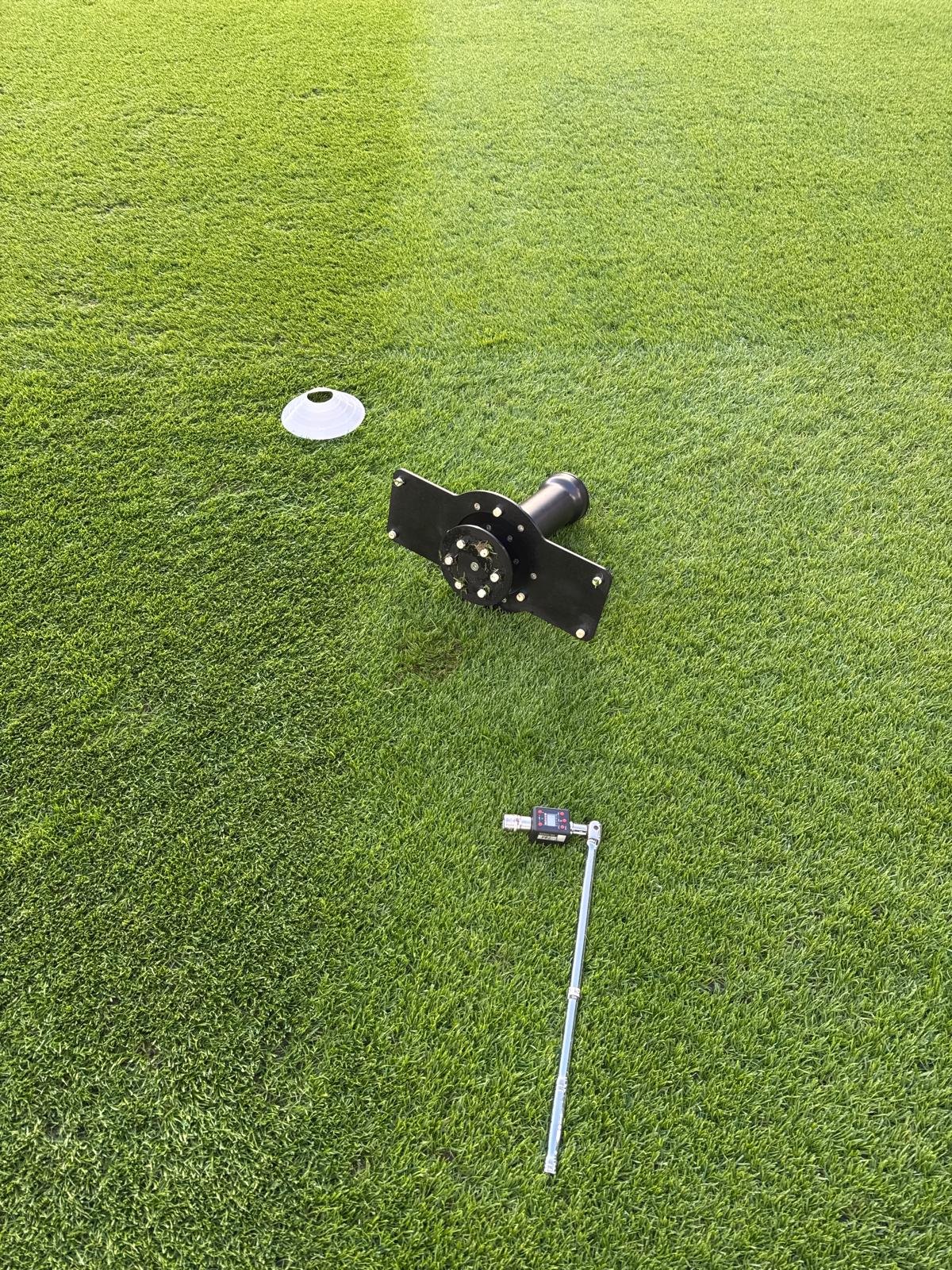
Interestingly, traction values remain higher on hybrid reinforced pitches, averaging 40Nm in March, comfortably within the ideal performance range of 40–50Nm. It raises a simple but important question for grounds teams: how does your surface compare? Are traction values improving as conditions become more favourable, or is your pitch still carrying excess organic material that could be holding back performance at this stage of the season?
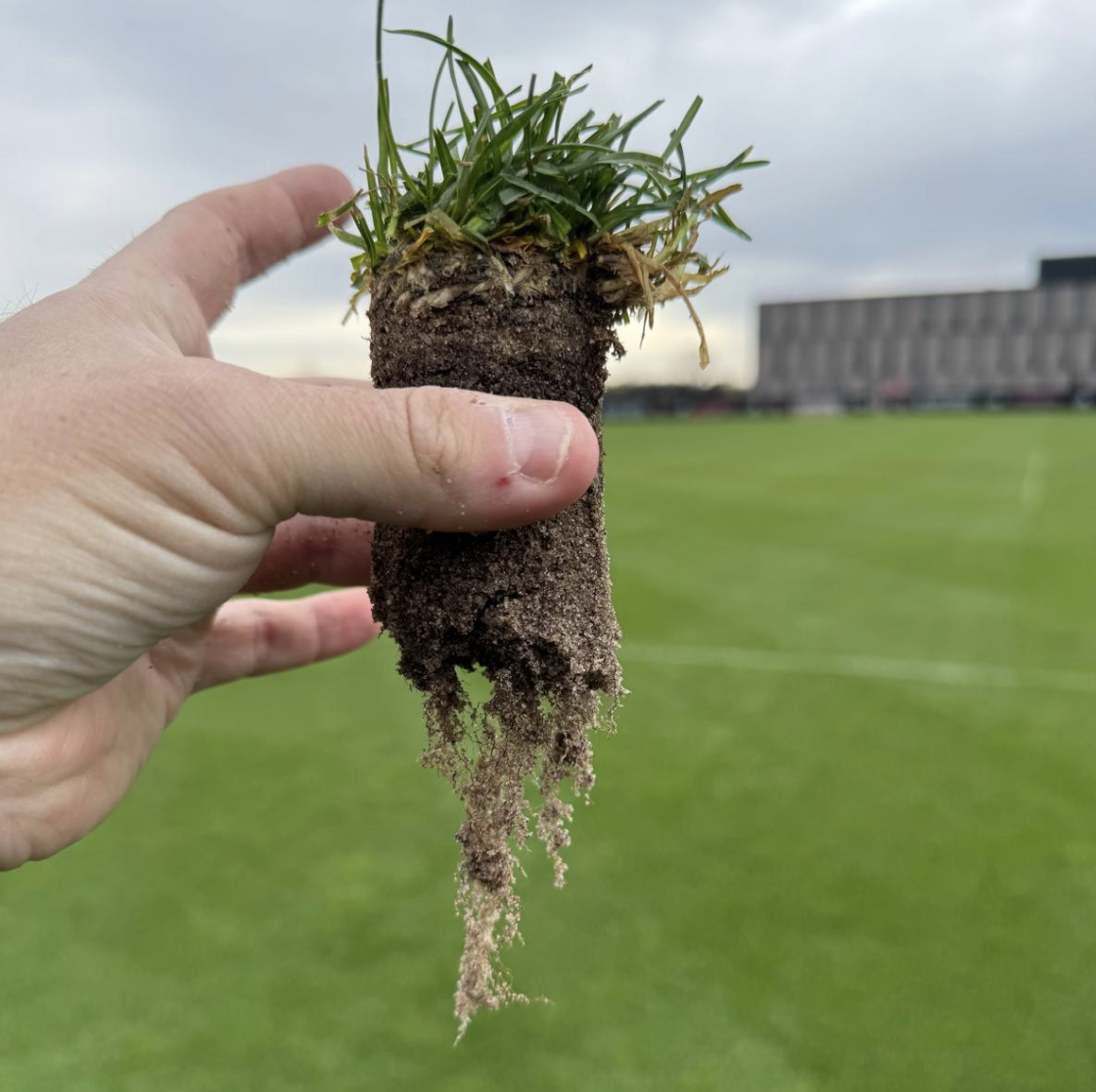
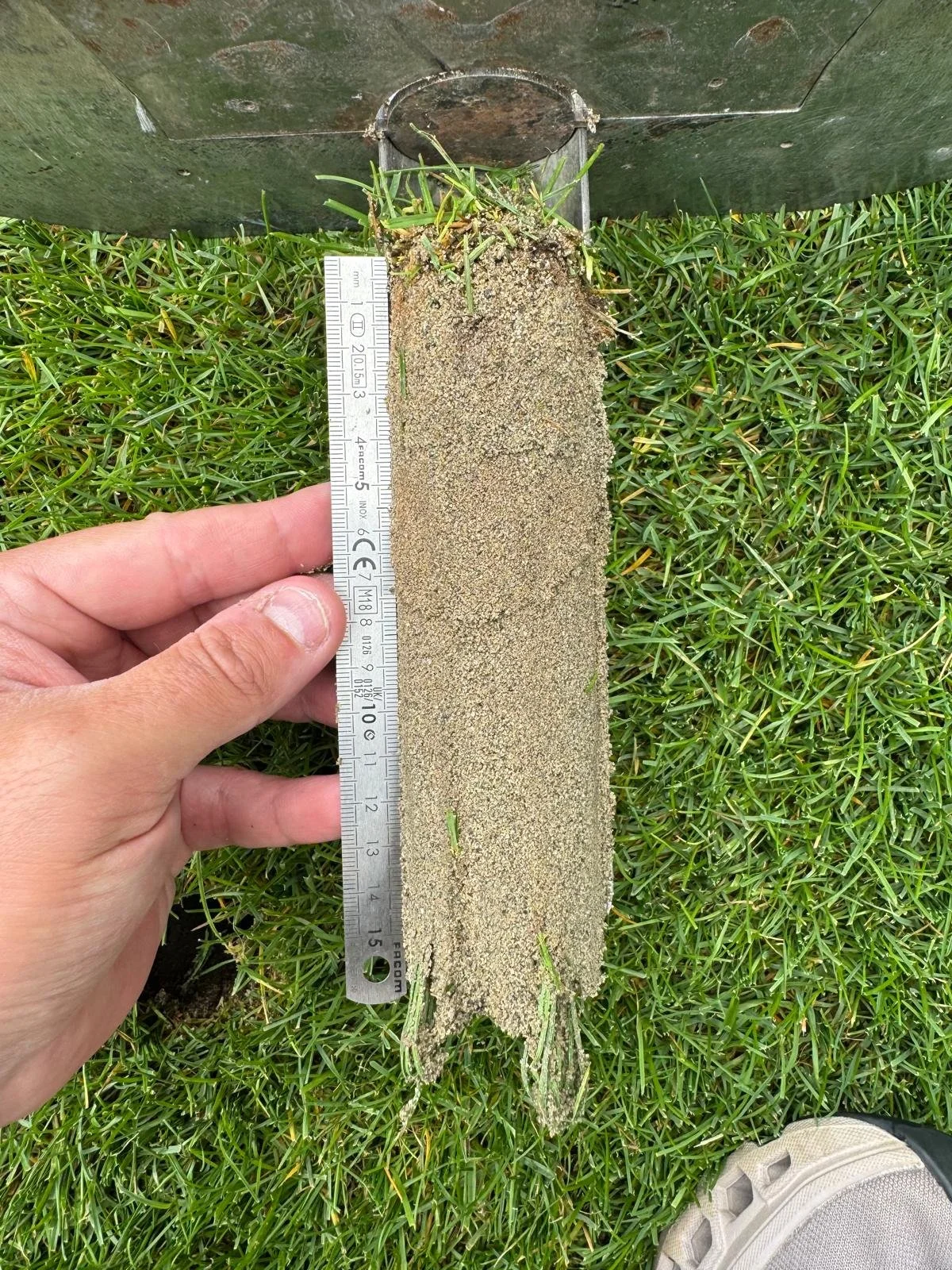
Root development is also beginning to move in the right direction. Average mass root depth has increased by 3mm since February, now sitting at 76mm. Mass root depth is influenced by countless variables – construction profile, nutrition, aeration, moisture levels and usage – but the trend suggests the grass plant is starting to respond to improving conditions.
Surface stability is also showing positive movement. Vertical deformation averages 4.6mm in March, down slightly from 4.8mm in February. Ideal values typically fall between 4.5mm and 6.0mm, meaning most surfaces are currently operating within an optimal range. As surfaces dry slightly and root systems strengthen, this reduction in deformation is to be expected.
Drainage performance continues to highlight one of the biggest structural differences in pitch construction. Average infiltration rates in March sit at 227mm per hour, but when separated by construction type the gap becomes clear. Non-constructed pitches average 176mm per hour, while purpose-built systems reach 333mm per hour.
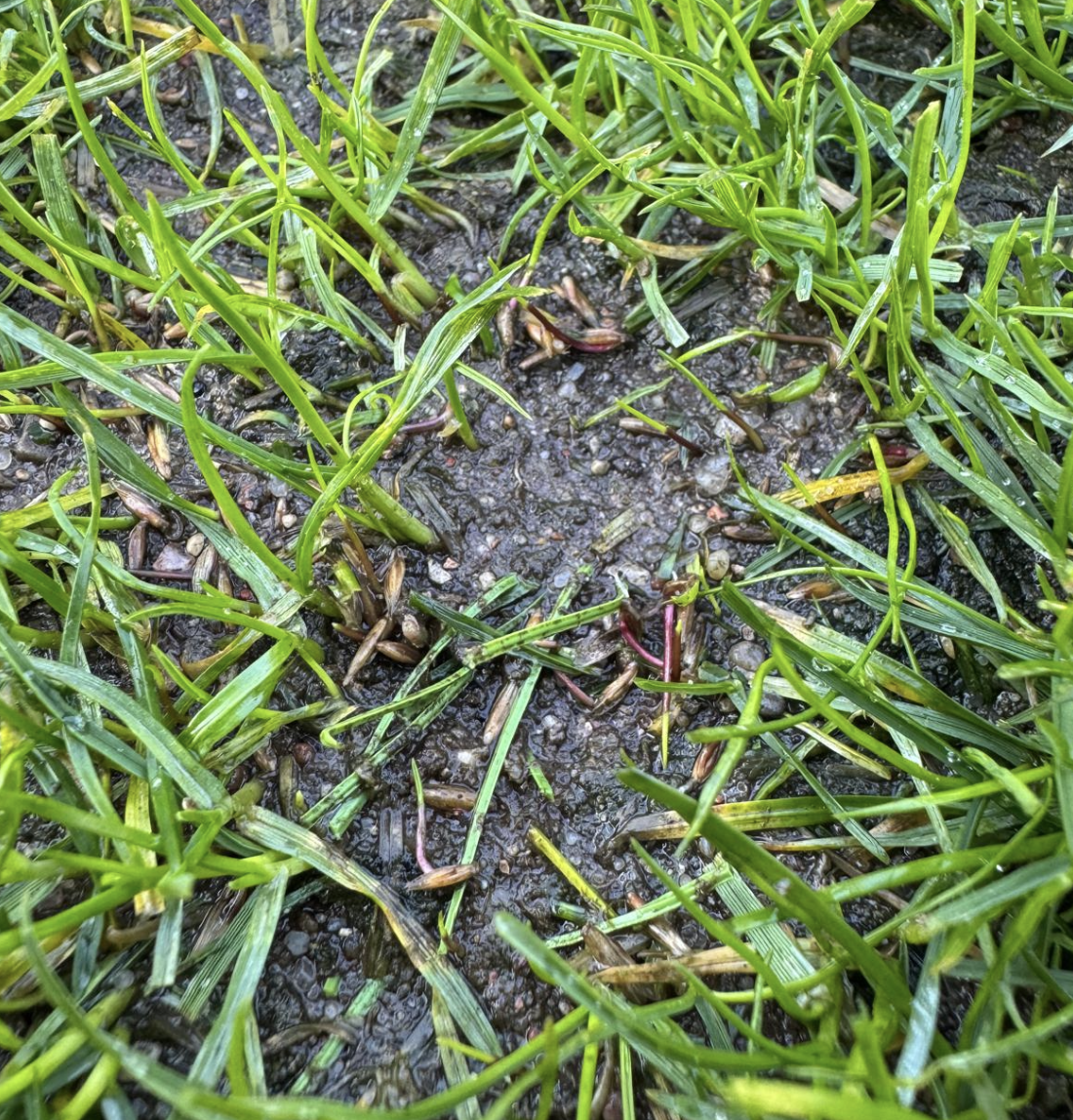
That difference reinforces something many of us were taught early in our careers. I remember being told during my early days in groundsmanship: “If you’ve got good drainage, you’ll have good grass cover.” It is a simple statement, but one that has stuck with me ever since. Maintaining infiltration rates through aeration and organic material management remains fundamental to keeping the surface functioning as intended. Once surfaces begin to cap or seal, grass coverage can be suffocated and water struggles to move through the pitch profile.
So where does that leave us as we move through March?
For many venues, the data suggests that surfaces are beginning to come through the most challenging part of the season. Root systems are slowly strengthening, deformation is stabilising, and performance metrics are moving back towards their optimal ranges. The coming weeks should allow grounds teams to become more proactive again rather than purely reactive.
As we move towards April, growth should continue to accelerate and opportunities to refine playing surfaces will increase. For many clubs, the focus now shifts from simply getting through winter to actively improving the performance of the playing surface.
Let’s not forget about the trends noted in organic matter and traction values for this period. As we aim to promote grass cover and strive towards the ‘perfect pitch’ again, it’s important to keep control on organic material and soft growth to ensure the surface not only looks better, but plays better.
In many ways, this is when the real work begins.
Written by Dean Tingley, ProPitch Business Development Manager