With September behind us and the season now properly underway, October is usually the point where the character of our pitches begins to change.
The days are getting shorter, temperatures are starting to fall and, for the first time in several months, we are relying far more heavily on natural moisture than irrigation. For grounds teams, this is often where the balance between presentation, performance and recovery becomes increasingly difficult to manage.
The international break has provided a much-welcomed opportunity for many, but with the weeks ahead likely to bring more fixtures, wetter conditions and lower temperatures, the pressure on pitches is only going one way.
So what does the data tell us about how our pitches are performing as we move into October?
Looking across our database of more than 12 million pitch performance data points collected since 2018, there is a lot in the October numbers that we would expect to see.
Perhaps the most obvious is surface hardness, which is currently averaging 83G.
This is right around what we would consider to be an optimum position and represents a good balance between firmness and moisture. The change from the firmer conditions we typically see earlier in the season is largely a result of increased natural moisture within the profile.
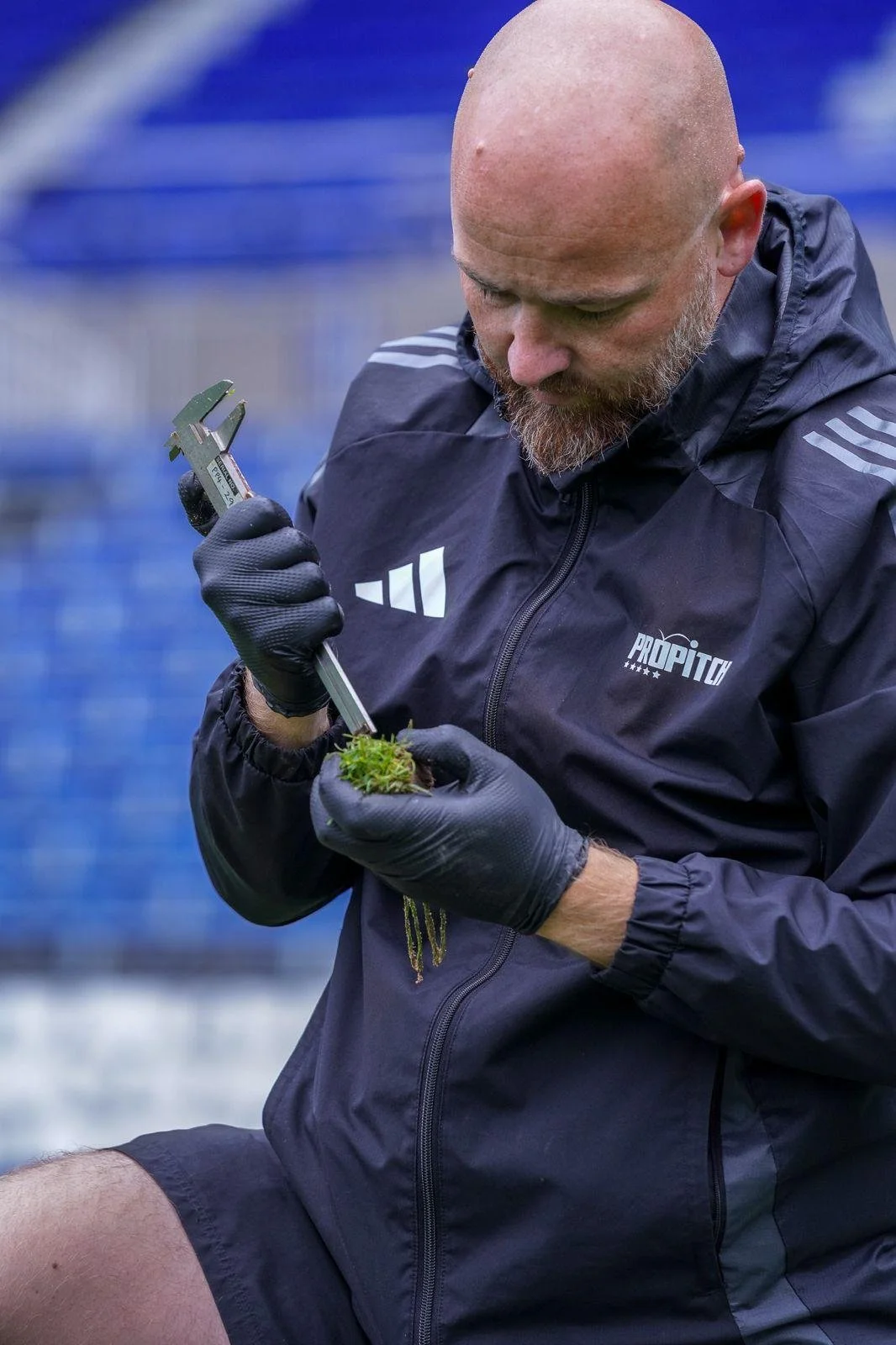
This is particularly noticeable on predominantly sand-based constructions. As moisture increases, these profiles tend to tighten up, which is something we can see reflected in the compaction data. Through the winter months, compaction depth generally reduces, effectively bringing the tighter part of the profile closer towards the surface.
It is one of those things that can sometimes be felt before it is seen in the data. The pitch can still look perfectly healthy, but the way the profile behaves underfoot starts to change.
Infiltration rates are averaging 324mm per hour, which remains a healthy figure.
However, there is an important point to make here. September was averaging more than 420mm per hour, so we have already seen a fairly significant drop in infiltration as we move into the wetter part of the season.
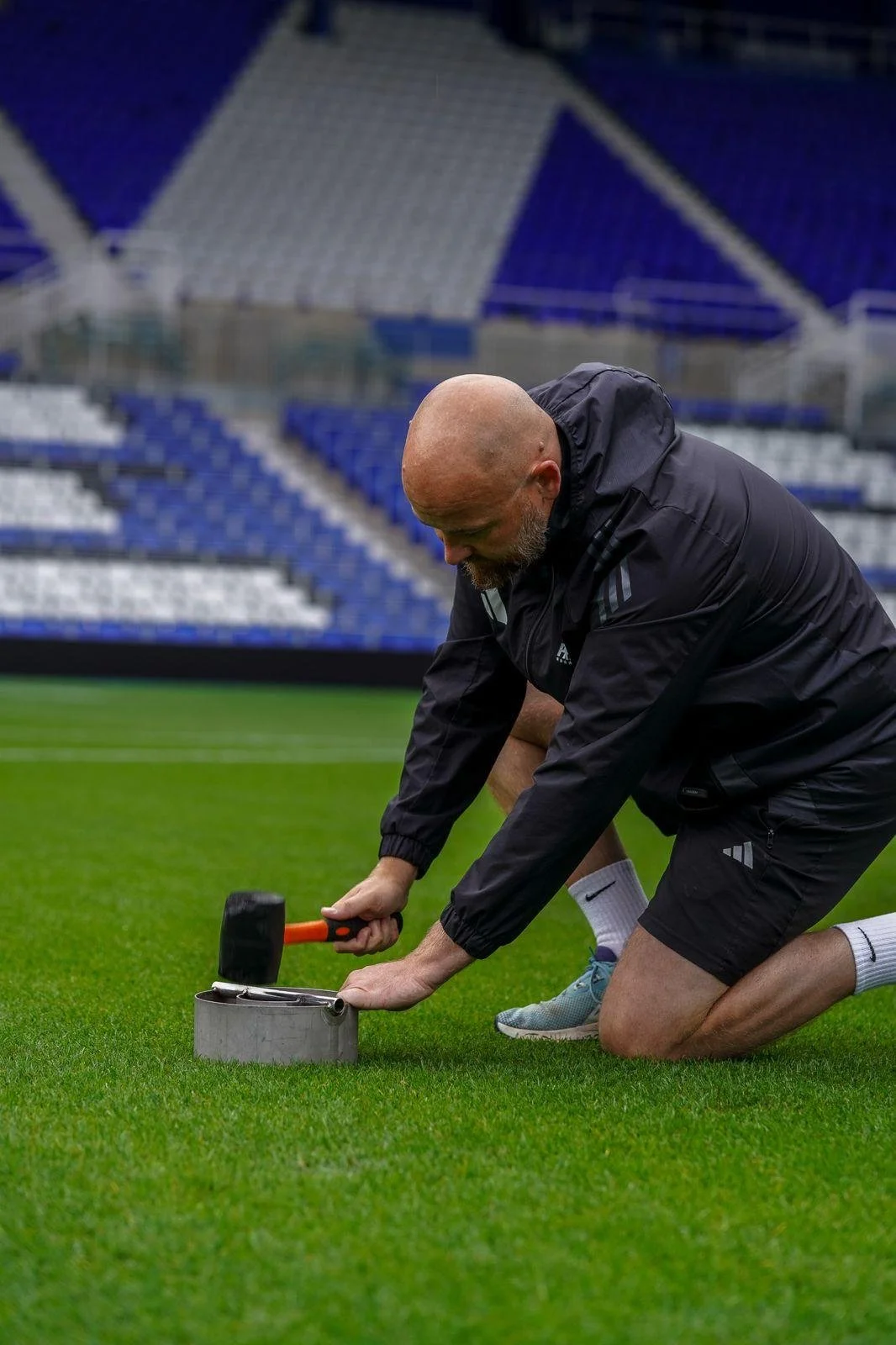
In my view, 324mm per hour is probably about as good as we are going to see the average for the next four months. That does not mean infiltration cannot be higher on individual pitches, but as a collective benchmark this is a useful number to keep in mind.
If your pitch is significantly below this figure already, I would be asking questions.
Not necessarily because the pitch is currently failing, but because there is very little reason to expect infiltration to improve naturally as we move through the winter. If anything, increasing moisture, organic debris, usage and reduced recovery are likely to put further pressure on the profile.
We have said it many times before, but it remains true: good drainage, good grass coverage.
Ground moisture is currently averaging 23.8%, which is a perfectly reasonable position for playing conditions.
The important thing is understanding what we are trying to achieve.
At match time, 23.8% can provide a good balance between traction, firmness and plant health. Between fixtures, however, we would ideally like to see moisture levels considerably lower where the conditions allow.
This is where the judgement of the grounds team becomes so important. There is no single moisture figure that is right for every pitch, every construction or every situation. The objective is to provide enough moisture to maintain plant health without carrying unnecessary water into the next fixture.
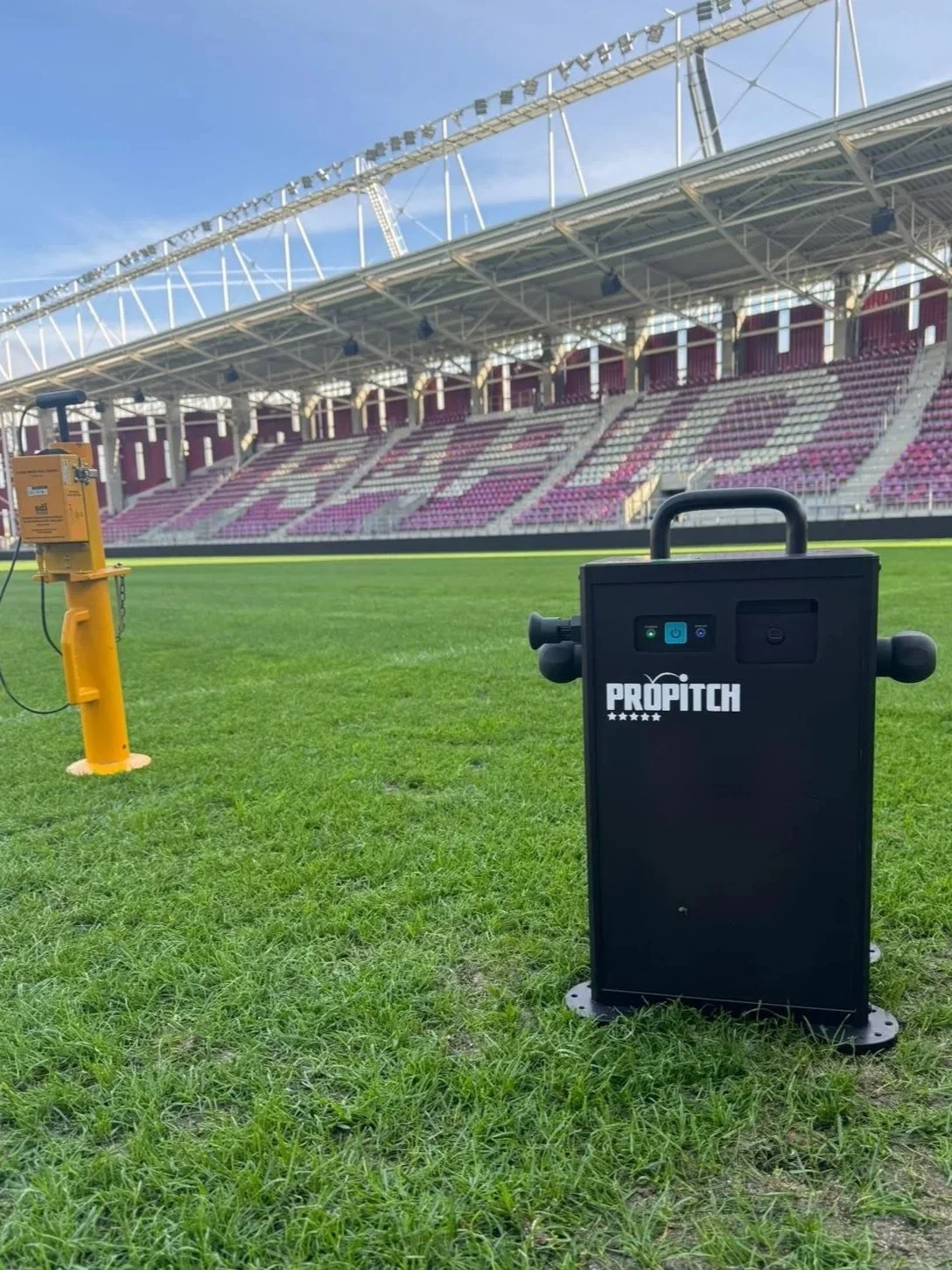
Vertical deformation is also in a healthy position, averaging 4.8mm.
Again, this ties in nicely with what we are seeing elsewhere. The combination of 83G hardness and 23.8% moisture is allowing surfaces to deform to a healthy depth under impact without becoming excessively soft.
It is the balance between these metrics that matters.
Looking at any one number in isolation can sometimes lead us down the wrong path. A pitch can be soft, but that does not necessarily make it better. Equally, a firm pitch is not automatically a problem. What we are really looking for is how those characteristics work together.
Mass root depth is currently averaging 68mm.
This is a solid position heading into winter and, realistically, I would not expect to see this figure increase significantly over the coming months.
As temperatures fall and plant growth slows, there is only so much opportunity for further root development. What we have now therefore becomes increasingly important.
A 68mm root system provides a reasonable foundation for the winter period. If you are significantly below this figure at this stage of the season, I would certainly be looking at why.
Root depth is one of those metrics that can become very difficult to correct once the season is fully underway. The opportunity to build the root system is largely behind us, so the focus now becomes maintaining what we have.
The metric that probably deserves the most attention this month is thatch and organic debris.
The average has increased to 4.5mm, which is more than double the September figure.
That is a significant change in a relatively short period of time.
We have talked about this many times before, but I make no apology for repeating it. Once organic debris gets beyond 5mm, alarm bells should be ringing.
We know from our data that as organic debris increases, other performance characteristics can begin to decline. Traction can reduce, infiltration can suffer and the surface becomes increasingly difficult to manage.
Quite often, this is the main ingredient in what eventually becomes a recipe for disaster.
If you have not checked your thatch or organic debris depth recently, now is the time to do it. If you are already above 5mm, I would be looking to take action rather than waiting for the problem to become more obvious.
The difficulty with organic debris is that it rarely becomes a problem overnight. It builds gradually, often while the pitch still looks perfectly good. By the time the symptoms become obvious, the underlying problem can be much harder to correct.
Grass coverage is also showing a slight decline, although I would not necessarily see this as a negative.
October in the UK can be a fairly sweaty month. Mild temperatures, moisture and reduced airflow can create a very good environment for disease, particularly where surfaces are carrying excessive density and moisture.
For me, this is where lean and clean becomes important.
There is a balance to be found between having enough grass to provide protection and having excessive density that creates a microclimate where disease can thrive. A slight reduction in coverage at this time of year is not necessarily something I would be overly concerned about if it is being managed intentionally.
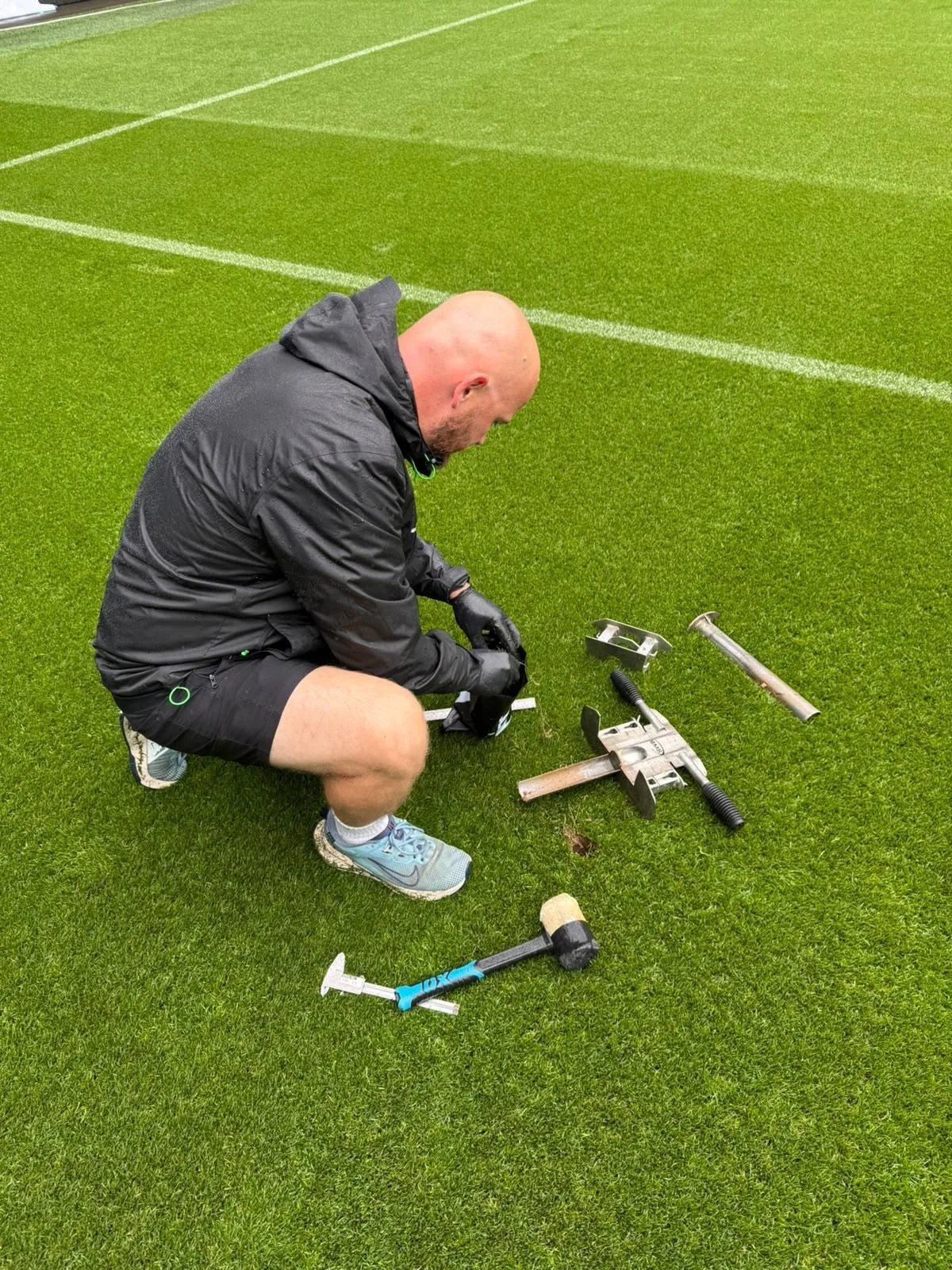
I remember having a conversation once about whether 95% grass coverage could actually be better than 100%.
I knew exactly what I meant at the time, although explaining it properly was another matter. There is certainly a balance between having a healthy, functional sward and simply trying to achieve maximum visual density.
Perhaps that is a story for another day.
For now, the data is telling us that most pitches are broadly where we would expect them to be.
The international break has provided a much-welcomed pause for many grounds teams, giving surfaces an opportunity to recover before we enter what is likely to be a much more demanding period.
We are not quite reaching for the winter coats yet, but the warning signs are there.
As fixture schedules tighten, two or even three matches every seven to ten days is likely to become far more common than one. Recovery time will become harder to find, natural growth will slow and the weather will increasingly dictate what can and cannot be achieved.
That is why the next few weeks are important.
There is still time to deal with organic debris, protect infiltration, maintain root health and keep surfaces in a condition where they can cope with what is coming.
October is not necessarily about doing more. It is about identifying what needs attention before the winter makes those problems harder to solve.

Written by Dean Tingley
Business Development Manager