Pitch Data Insights: August
With the season now upon us and what has been a prolonged period of dry, testing conditions, August presents a very different set of challenges for grounds teams compared to the months that precede it.
For many, the focus has shifted multiple times across the summer, from renovation to establishment to recovery and now into performance. However, with extreme heat, limited natural rainfall and increased disease pressure, the reality on the ground has been far from straightforward.
So what does the data tell us about how playing surfaces are performing during this period?
Looking across our database of more than 12 million pitch performance data points collected since 2018, August provides a fairly consistent picture. In truth, there are very few surprises. Instead, the data largely reflects the conditions we have all been working in over recent weeks.
Average surface hardness currently sits at 86G. This is not far away from what we would consider an optimal value and is one that is typically associated with hybrid reinforced systems, as they are slightly firmer. Given the weather conditions and disease pressure, maintenance as we knew it has been thrown out the window of late and, as a result, it is perhaps no surprise that surfaces are presenting slightly firmer, particularly where irrigation has been carefully managed to balance plant health with playability.
Traction values are also in a strong position, averaging 40Nm. This sits comfortably within the optimal range of 40–50Nm and is largely driven by the condition of the surface following renovation works which removed all of last season’s vegetation. With organic matter and thatch depths at their lowest point of the year, studs are able to interact more directly with the construction profile and, where present, hybrid reinforcement fibres.
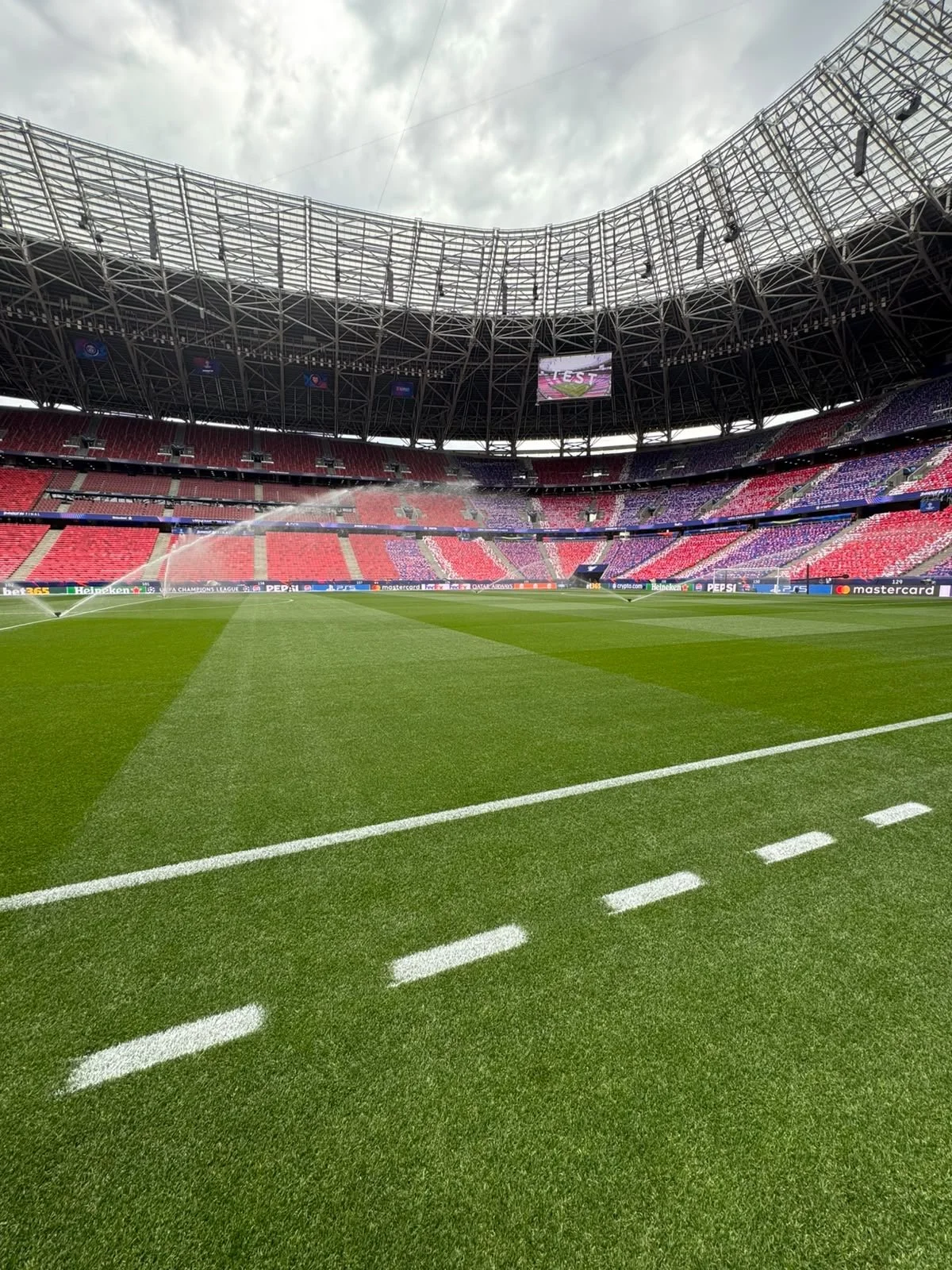
Our data consistently shows that the leanest surfaces tend to deliver the strongest traction values. Maintaining a clean profile free from excess organic debris not only enhances rotational resistance, but also sets the pitch up well for the months ahead. A surface that is clean of organic debris now will typically maintain better infiltration rates through the winter and provide a more durable, consistent playing platform if maintained correctly.
Infiltration rates for August average 367mm per hour, which should be seen as a solid benchmark. Where possible, measuring infiltration prior to the start of the season provides a useful reference point for the months ahead. Whether a pitch sits above or below this figure can help guide maintenance decisions, particularly as usage increases and weather patterns begin to shift.
Maintaining infiltration remains one of the key drivers behind long-term pitch performance. It is something many of us were taught early on, and it still holds true today: if you have good drainage, you will have good grass coverage. Once that begins to decline, surfaces can quickly become compromised.
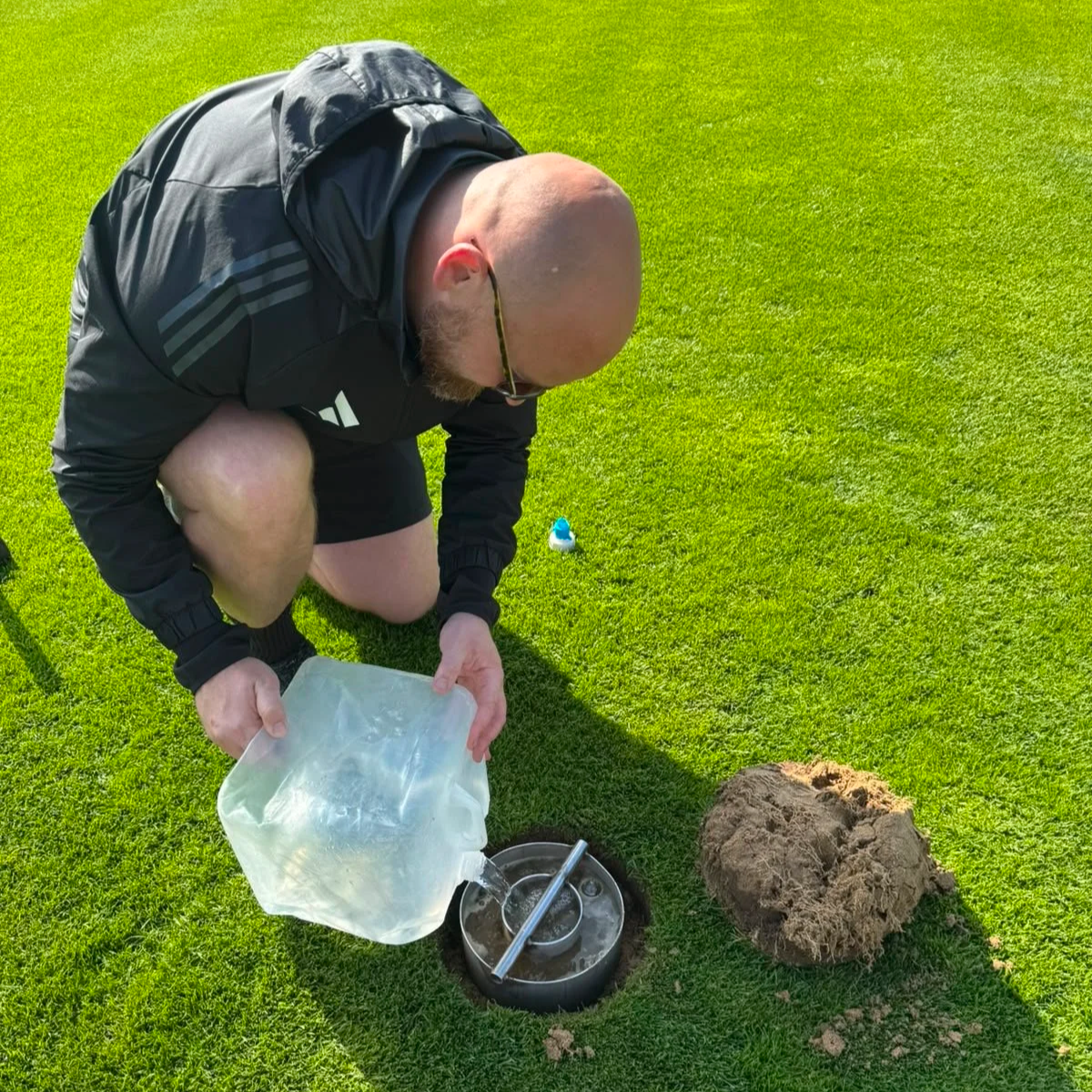
Ground moisture averages 21%, although this figure perhaps needs to be viewed with some context. For many operating outside of the elite environment, achieving this level of moisture through recent conditions will have been challenging. In fact, given the heat and the associated disease pressure, there is an argument that 21% may even be slightly high in the current climate.
At this time of year, the key is not simply how much water is applied, but when it is applied. Timing of irrigation is critical. Get that balance wrong and issues can escalate quickly, particularly with disease pressure as high as it has been in recent weeks.
Root development is showing a positive starting point, with average mass root depth at 66mm. This should build as we move into the coming months, although progress will remain closely linked to both construction type and irrigation strategy.
On sand-dominated profiles, it is likely that roots are already pushing deeper in search of moisture. While this can be beneficial from a stability and performance perspective, it also introduces a balancing act. Irrigation practices aimed at supporting plant health must also consider disease risk, and the root system will ultimately respond to whichever approach is taken.
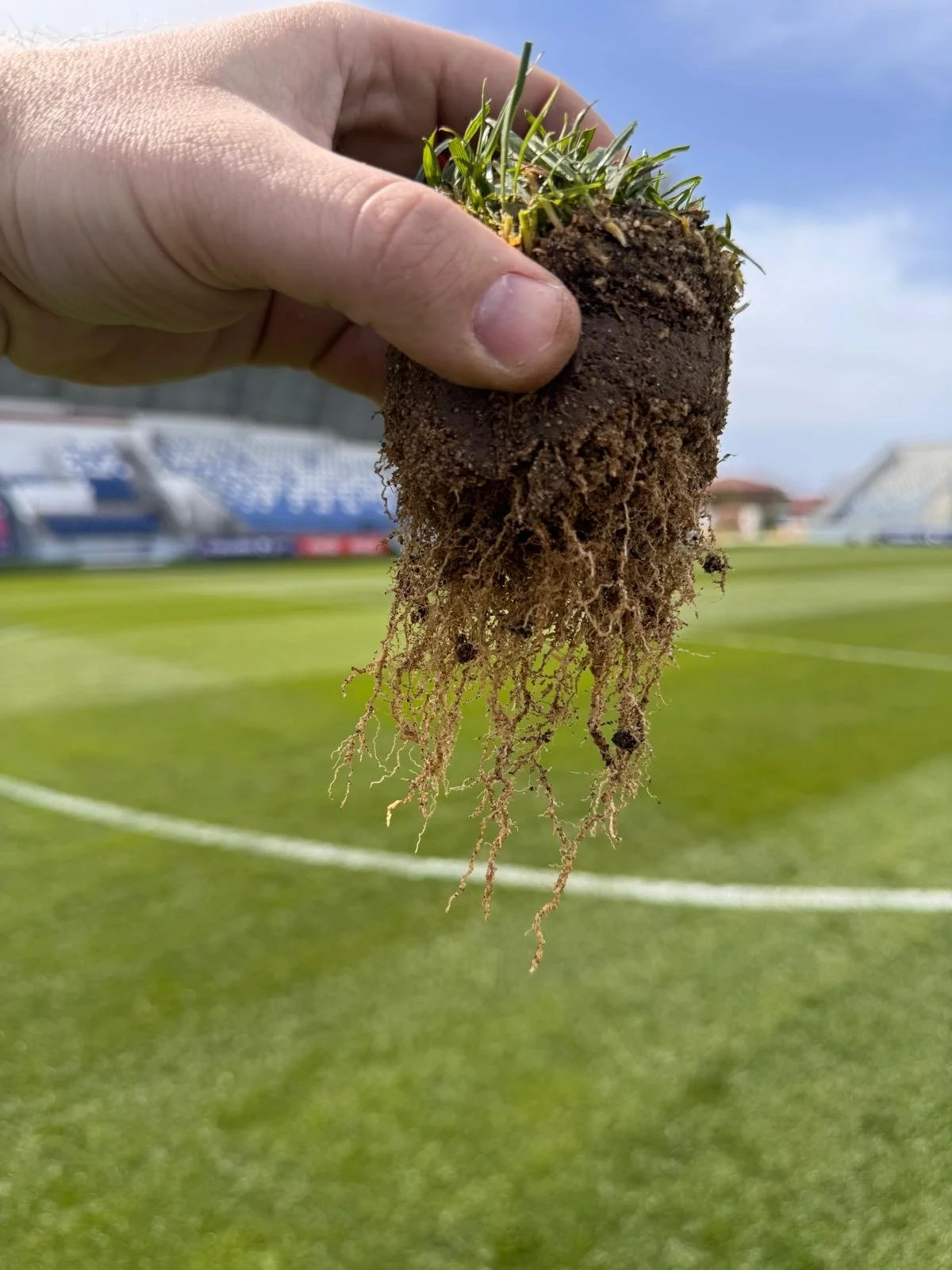
Organic matter levels are understandably low, averaging around 4mm. This is very much in line with expectations following renovation and represents a low-risk position heading into the season. That said, perspective is important. While 0–5mm is generally considered acceptable, this is the one time of year where there is a real opportunity to drive that figure even lower.
Personally, anything above 2–3mm at this stage would raise questions. The current conditions provide a window to be aggressive, to keep surfaces lean and to remove any unnecessary accumulation before the season begins in earnest. Once that window closes, it becomes far more difficult to regain control.
NDVI values are averaging 0.83, just below the typical target range of 0.85–1.00. This aligns closely with what we are seeing across the other data sets. Slightly reduced density, combined with surfaces that are intentionally being managed on the lean side, creates a fair reflection of current conditions.
From a performance perspective, key metrics such as shock absorption, vertical deformation and energy restitution are now coming into sharper focus.
Shock absorption currently averages 46%, vertical deformation sits at 4.6mm, and energy restitution at 33.3%. These are all within acceptable ranges and indicate that, overall, surfaces are performing well. However, they are all influenced by surface hardness, which, as mentioned, is sitting slightly above the ideal.
This is often the case at the start of a season. Increased mowing frequencies and a natural push towards presentation can lead to firmer surfaces. While visually appealing, it is important to remain mindful of how this impacts playability and athlete performance.
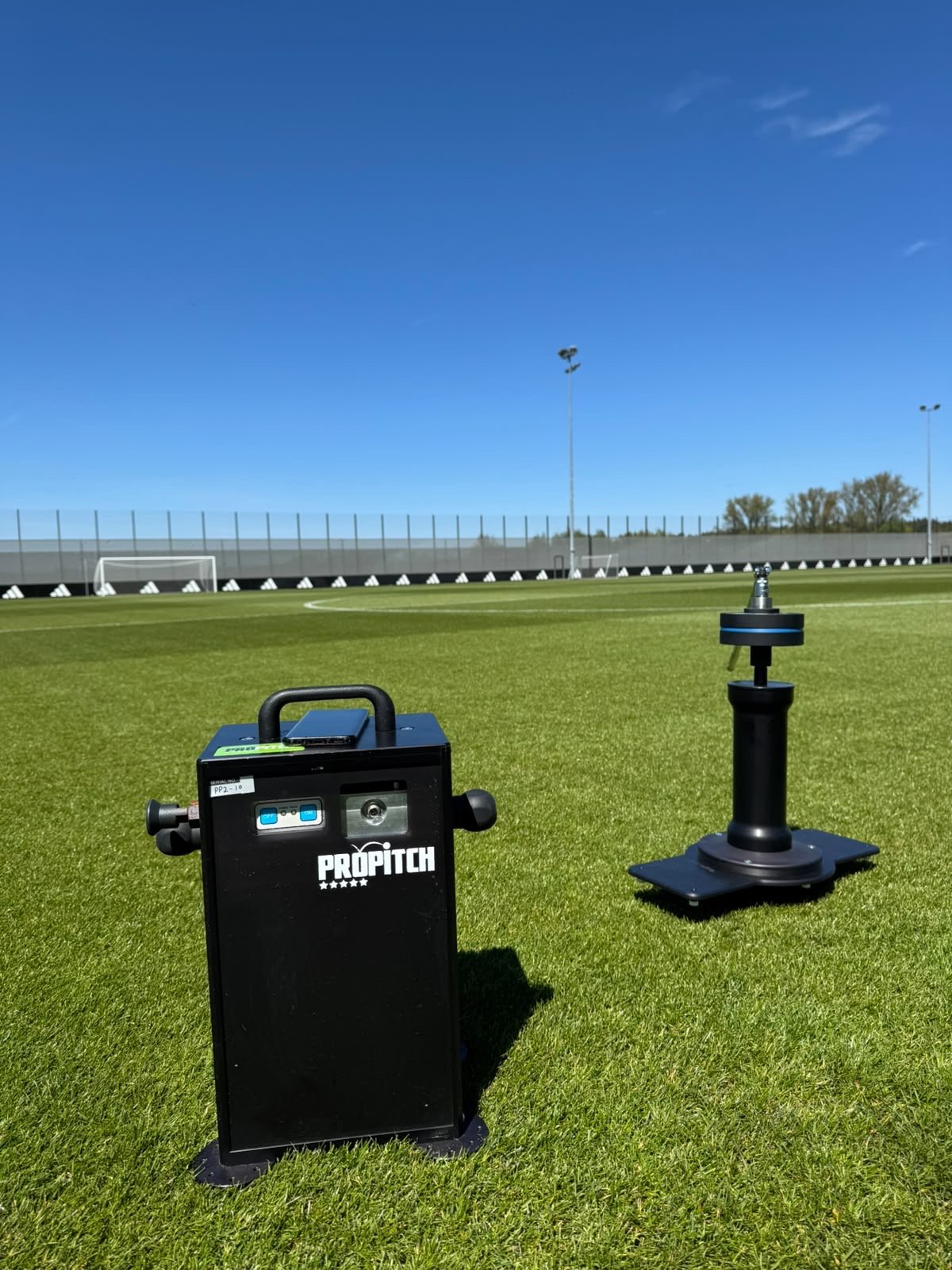
It brings us back to a simple strap line that was thrown about when I first joined ProPitch: if you can measure it, you can manage it. It is something worth bearing in mind as maintenance practices are fine-tuned.
As we move into September, the challenge will be maintaining this balance. Managing wear, controlling organic matter, preserving infiltration and carefully navigating irrigation practices will all play a role in how surfaces perform over the coming months.
In many respects, August sets the foundation.
What follows is about how well that foundation is managed.

Written by Dean Tingley
Business Development Manager